Concrete, gunite, and shotcrete pools are custom-built structures, not off-the-shelf products. Their price swings widely based on dimensions, depth, shape, interior finish, equipment, site access, soil conditions, and the grading and hardscape built around them.
This guide breaks 2026 pricing into ranges you can actually use to plan. That means separating the pool installation cost from the complete backyard project, and from the ongoing maintenance and future resurfacing that come with owning a concrete pool for decades.
Key Takeaways
- Concrete pool installs typically cost $50,000–$120,000+ before decking, fencing, or landscaping
- Complex shapes, hillsides, and premium finishes can push totals to $150,000–$200,000+
- A $30,000 budget won't fund a complete concrete pool in most U.S. markets
- Slope, soil, and drainage often drive cost more than the pool design itself
- Structure, drainage, and permits should outrank cosmetic upgrades early on
How Much Does an Inground Concrete Pool Cost in 2026? (Pricing Overview)
There's no single national price tag for an inground concrete pool, because published numbers might describe a bare shell, a basic installed pool, or a fully finished backyard. Before comparing quotes, match each number to the scenario it describes.
Current 2026 estimates from Thursday Pools put installed concrete and gunite pools at $50,000 to $120,000 or more, depending on size, finish, and site conditions. That range reflects a completed, functioning pool, not just poured concrete.
Entry-Level or Smaller Concrete Pool
Expect $50,000 to $90,000 for a smaller, simpler rectangular pool, such as a 12-by-24-foot shotcrete pool with basic tile and standard equipment. This tier usually assumes:
- Level or near-level lot with straightforward excavation
- Standard plaster or basic aggregate finish
- Entry-level pump and filter package
- Minimal decking beyond what's needed for equipment access
Mid-Range or Standard Custom Pool
A $65,000 to $120,000 budget covers a more typical custom project, similar to a 14-by-28-foot gunite pool priced near $100,000. This range usually includes:
- Moderate decking around the pool
- Upgraded pump, filter, and sanitation equipment
- Light design complexity, such as a tanning ledge or raised spa
High-End or Complex Concrete Pool
Large, feature-rich builds push past $120,000 and can reach $200,000+. Costs climb fastest when you add:
- Infinity edges, integrated spas, or extensive water features
- Hillside engineering and complex structural work
- Premium tile, custom shapes, and full hardscape packages

Can $30,000 Cover a New Concrete Pool?
Not for a complete, code-compliant project. National benchmarks start around $50,000 for a full concrete build, so $30,000 sits below every current planning range. That figure might stretch to a limited shell-only scope in an unusually favorable local market. It still won't cover permits, safety fencing, or finished decking in most areas.
These are planning estimates, not quotes. The only way to know your real number is an itemized, site-specific proposal. Stonework Design & Build provides free on-site estimates with line-item scopes so you can see how size, finish, and site conditions affect the total.
Key Factors That Affect the Cost of an Inground Concrete Pool
Construction Method: Concrete, Gunite, and Shotcrete
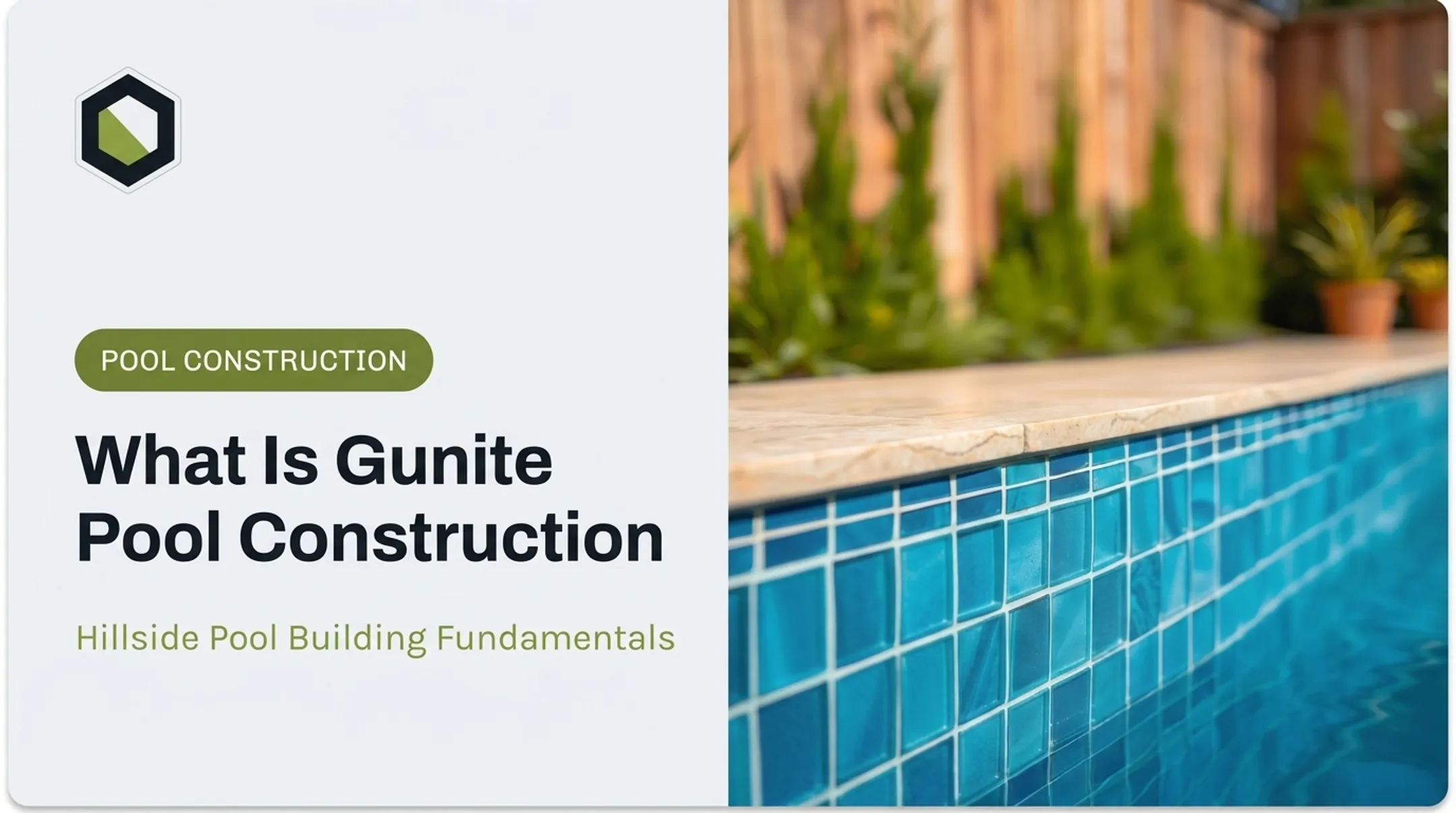
These terms get used interchangeably, but they're not separate pool types. Concrete is the material; shotcrete is the pneumatic application method, projected at high velocity onto rebar-reinforced forms. Gunite is the dry-mix version of shotcrete, where water gets added at the nozzle instead of premixed. Either process builds the same structural shell, so the terminology mainly affects crew scheduling rather than your final price.
Size, Depth, and Shape
Bigger pools cost more, but complexity matters just as much as square footage. Gunite pricing benchmarks run $100 to $280 per square foot, with a 14-by-28-foot pool landing near $100,000. A 20-by-40-foot pool with a deep end, beach entry, and integrated spa will cost more than a simple rectangle of the same footprint. Every curve, ledge, and depth transition adds forming and steel work.
Site Conditions
Your lot can move the budget more than the pool design itself. Watch for:
- Rocky or expansive soil requiring extra excavation
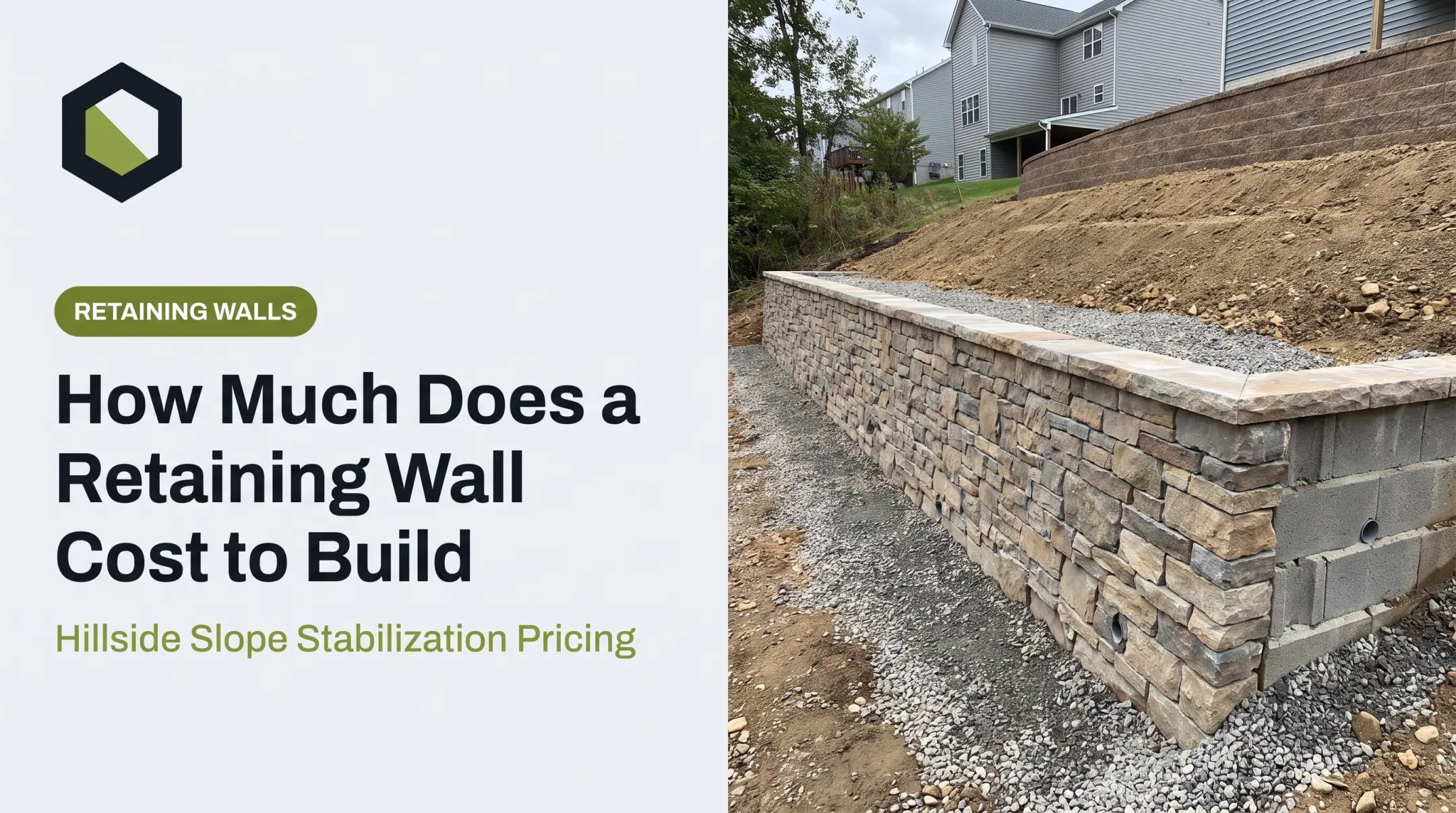
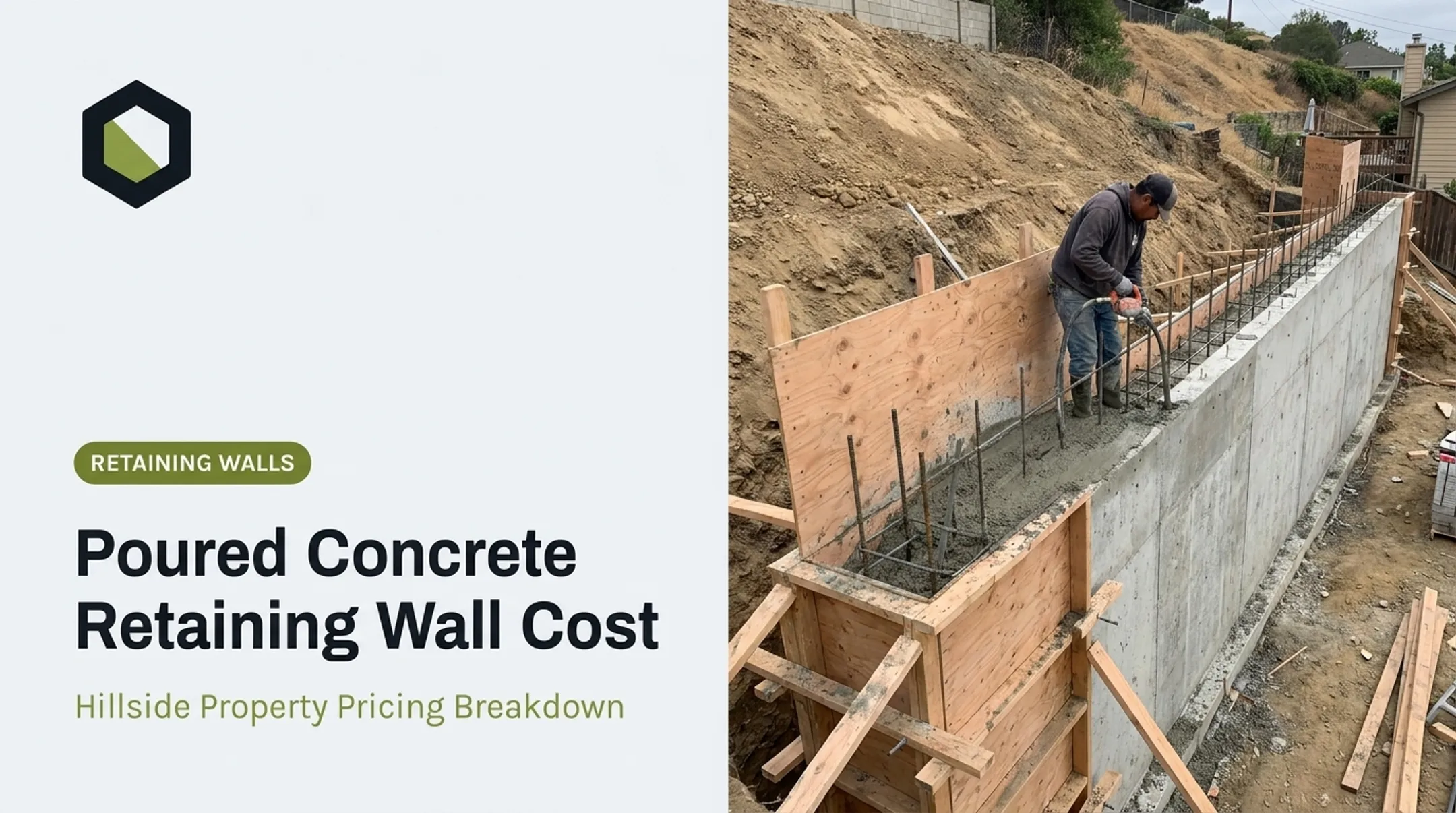
- Steep slopes needing retaining walls, which can add $10,000 to $35,000+ on their own
- Limited equipment access forcing hand-digging or smaller machinery
- Groundwater, utility conflicts, or demolition of existing structures
- Drainage design to keep runoff away from the shell and foundation Hillside lots need engineering review before excavation starts, since retaining structures and raised decks carry their own load calculations.
Interior Finish Options
Finish choice affects both upfront cost and how soon you will need to resurface:
- Standard plaster costs the least upfront and lasts roughly 7 to 10 years
- Aggregate or pebble finishes cost more initially but often last 20+ years
- Tile ranges from a few dollars per square foot to $30 or more for premium designs Choose based on how long you plan to own the property, not just the sticker price.
Equipment, Systems, and Approvals
Pumps, filters, heaters, automation, and lighting each carry separate installation costs. Some features, like plumbing for a future water feature or heater, are far cheaper to build in now than retrofit later. Permits, engineering review, and HOA approval also vary widely by city. Talk with your contractor early about what your specific jurisdiction requires.

Concrete Pool Cost Breakdown: What You Are Really Paying For
One-Time Construction Costs
A full concrete pool build breaks into these major categories:
Shell and structure
- Design and structural engineering
- Permits and inspections
- Excavation and soil hauling
- Steel reinforcement (rebar)
- Plumbing rough-in
- Gunite or shotcrete shell application and curing
Finish and equipment
- Interior finish (plaster, aggregate, or tile)
- Coping and decking
- Equipment (pump, filter, heater, sanitation)
- Electrical work and startup
Labor and materials typically split close to evenly across a project's total budget. A low materials number with a thin labor allowance can still overrun once the crew hits rock, poor access, or a mid-build redesign.
Recurring Ownership Costs
Owning a concrete pool comes with ongoing expenses long after the crew leaves:
- Annual maintenance: roughly $2,000 to $4,000 per year for chemicals, cleaning, and servicing
- Resurfacing: $6,000 to $15,000 or more, needed every 10 to 15 years
- Pump electricity: about $30 to $150 per month, depending on pump type
- Periodic service visits: around $236 on average per visit
These figures come from current industry cost guides. They're worth budgeting for from day one, not treating as a surprise later.
Surrounding Work Often Quoted Separately
Many contractors price these items apart from the pool shell itself:
- Safety fencing and gates
- Decking or patio surfaces (when not already in the base package)
- Drainage and grading
- Retaining walls
- Planting, irrigation, and low-voltage lighting
- Restoration of areas disturbed during construction
A Sample Itemized Quote Checklist
When comparing bids, ask whether each line item is included, excluded, provisional, or dependent on site conditions:
| Line Item | Included | Excluded | Provisional |
|---|---|---|---|
| Excavation & hauling | |||
| Steel & shell | |||
| Interior finish | |||
| Equipment package | |||
| Decking/coping | |||
| Fencing | |||
| Permits |
Ask your contractor how they handle allowances for unexpected rock, difficult access, drainage surprises, or utility conflicts. Vague allowances are where budgets blow up.
Stonework Design & Build coordinates pools, hardscape, retaining walls, grading, and planting under one design-build process. That doesn't eliminate every cost change a hillside lot might throw at you, but it does mean elevations, drainage, and finish decisions get made once, instead of debated between four separate subcontractors.
Low-Cost vs High-Cost Concrete Pools — How to Set the Right Budget
What You're Really Comparing
The cheapest quote isn't automatically the better deal. Compare bids on performance, durability, and long-term value—not just the bottom line:
| Factor | Lower-Cost Approach | Higher-Cost Approach |
|---|---|---|
| Shape | Simple rectangle | Custom curves, ledges |
| Finish | Standard plaster | Pebble, tile, glass bead |
| Equipment | Basic pump/filter | Automation, heater, salt system |
| Site work | Level lot assumed | Retaining walls, engineered drainage |
Ways to Control Initial Cost
- Choose an efficient shape instead of complex curves
- Skip nonessential water features for now
- Select a standard finish and upgrade later if desired
- Phase hardscape and landscaping into a second project
- Rough in plumbing pathways now, even if the heater comes later
- Lock dimensions before engineering and excavation—late changes get expensive fast
Where Cutting Corners Creates Risk
Some savings aren't worth the trade-off:
- Skipping drainage design on a sloped lot
- Under-sizing pump and filter equipment for the pool volume
- Accepting vague allowances instead of itemized pricing
- Hiring unlicensed crews for structural or electrical work
- Omitting permits or engineering review to save time
California's CSLB recommends getting at least three bids and checking references before signing a pool contract, and confirming your contractor holds the correct license classification for pool work.
A Step-By-Step Budget Process
- Define how you'll actually use the pool (laps, entertaining, kids, therapy)
- Measure the usable site and note slope and access constraints
- Prioritize must-have features before nice-to-haves
- Collect itemized, comparable quotes from multiple contractors
- Verify licensing, insurance, and bonding
- Reserve funds for approved scope changes discovered during excavation

If you own a residential, hillside, HOA-governed, or estate property in Los Angeles or Ventura County, Stonework Design & Build offers a free on-site estimate covering pool, grading, retaining walls, hardscape, and planting together. Call (818) 923-4026 to schedule a site walk.
Conclusion
An inground concrete pool's 2026 cost is driven by the shell, the site, the systems, the finishes, and the work built around them—not a single advertised starting price. A $60,000 quote and a $150,000 quote can both be "correct" for the same backyard; the difference is scope.
Before signing anything, compare itemized, site-specific proposals rather than headline numbers. Prioritize structural quality, drainage, and permitting first, then add the finishes and features that fit your budget.
Plan for durable construction and a complete outdoor space, then lock the number only after you have a site-specific, line-item proposal in hand.
Frequently Asked Questions
How much more expensive is a concrete pool?
Vinyl liner pools typically run $25,000–$65,000, fiberglass $45,000–$100,000, and concrete/gunite $50,000–$120,000+. Concrete costs more upfront; the gap depends on bare shell vs. full project scope.
How long will a concrete pool last?
A properly designed and maintained concrete shell can last 50 years or more. The interior finish, however, needs resurfacing roughly every 10 to 20 years depending on the material you choose.
What is the cheapest inground pool to put in?
Vinyl liner pools typically carry the lowest upfront cost, often $25,000 to $65,000 installed. Plan on liner replacement every 7–10 years—lifetime cost can close the gap with concrete.
Can I get an inground pool for $30,000?
Not for a complete concrete build. Full installed concrete pools typically start around $50,000 nationally, so $30,000 covers only a limited scope—get a site-specific quote for your lot.
How much does a 20x40 concrete pool cost?
A 20x40 concrete pool often lands roughly $100,000 to well past $200,000 installed. Depth, shape, finish, access, and decking drive most of that spread.
What is the average cost for concrete around a pool?
Poured concrete decking typically runs $6 to $18 or more per square foot installed, separate from the pool shell itself. A 900-square-foot deck might run $5,400 to $16,200+, depending on finish, grading, and access.