Many homeowners comparing pool materials run into the same issue: they don't know what actually happens beneath the water once construction starts. Sloped lots, tight access, or a desire for custom shapes make this decision even more complicated.
This guide breaks down what gunite construction involves, how the build sequence typically unfolds, what factors change cost and performance, and how gunite stacks up against fiberglass and vinyl-liner alternatives. We'll also flag when gunite might not be the right fit for your property.
Key Takeaways
- Gunite is a dry concrete mix sprayed pneumatically over rebar to form a custom, reinforced pool shell.
- Design flexibility and structural durability make it a strong fit for custom shapes, hillside lots, and integrated features.
- Outcomes depend heavily on engineering, plumbing installation, curing time, and contractor workmanship, not just the material label.
- Fiberglass and vinyl-liner pools may suit different budgets, timelines, or design priorities.
What Is Gunite Pool Construction and Why Is It Used?
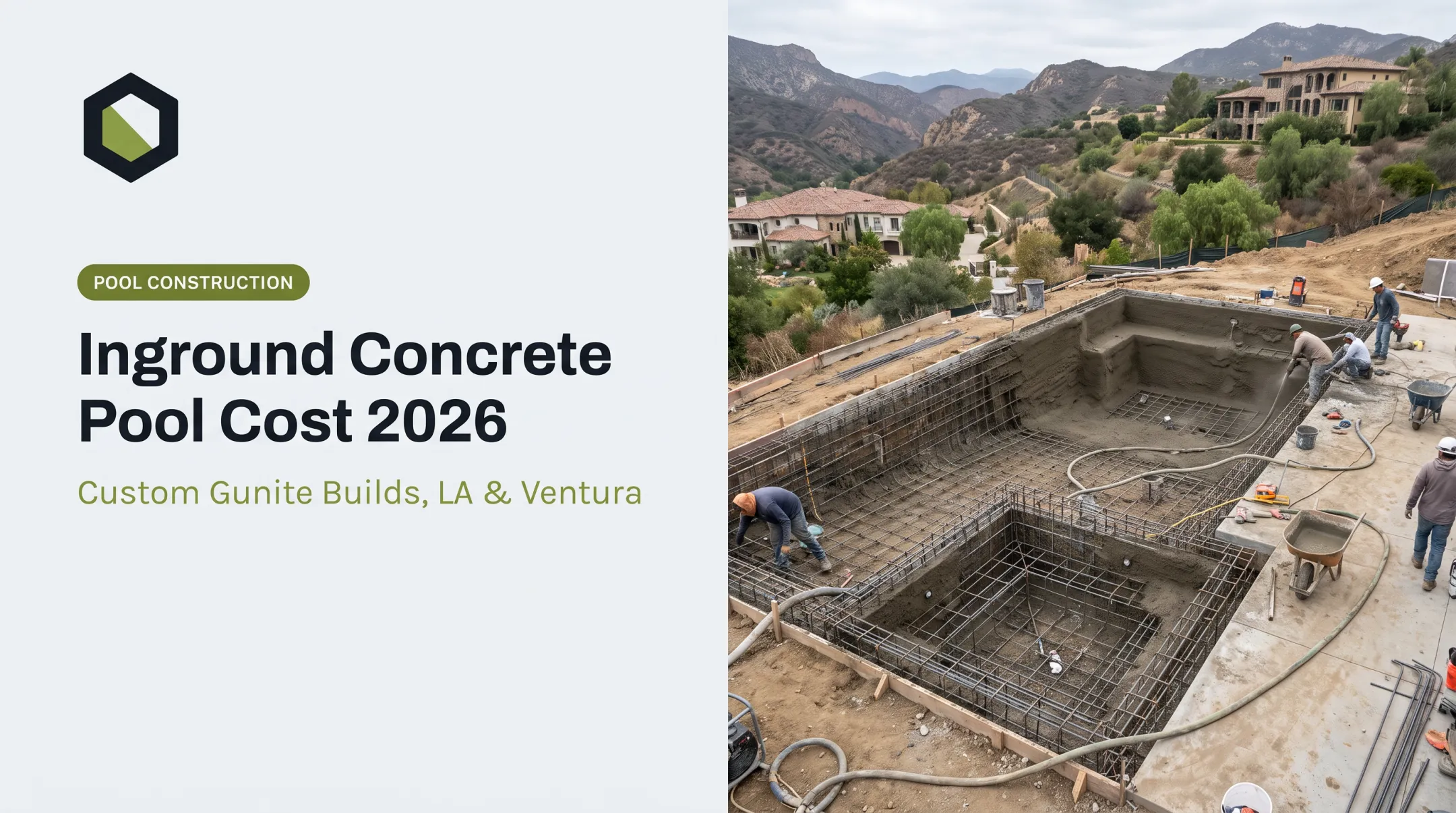
Gunite refers to a dry-mix shotcrete process. Dry cement and aggregate travel through a hose, and water is injected at the nozzle. The mixture then sprays at high velocity onto a steel-reinforced frame.
This differs from wet-mix shotcrete, where the concrete is already mixed with water before it's pumped to the nozzle. According to the American Shotcrete Association, both methods fall under the shotcrete umbrella; the distinction is where water enters the process.
A "gunite pool" describes the structural shell, not the finished surface. The gunite forms the bones of the pool. Plaster, pebble, quartz, tile, coping, and decking come later and serve a different purpose: waterproofing and aesthetics.
Gunite vs. Shotcrete: Does It Matter?
Not as much as the terminology suggests. Whether a crew uses dry-mix (gunite) or wet-mix (shotcrete) placement, the final quality depends on:
- Mix design and material specifications
- Reinforcement placement and clearance
- Application technique and curing practices
- Inspection checkpoints throughout the build
The American Concrete Institute's 2024 guide, ACI PRC-506.8-24, notes that a properly designed and constructed shotcrete pool can have a service life of 50 to 100 years or more. That's a qualified expectation tied to correct design and execution, not a guarantee tied to the label alone.
Why Homeowners Choose Gunite
Gunite's biggest draw is design freedom. Because it's shaped on site rather than dropped in as a prefab unit, builders can customize:
- Depth changes, steps, and benches
- Tanning ledges and attached spas
- Vanishing edges and raised structural decks
- Shapes that respond to slopes or irregular lot lines
For hillside or oddly shaped properties across Southern California, that flexibility often makes gunite the practical choice rather than just a preference.
How Gunite Pool Construction Works
Local permitting rules, site conditions, weather, and inspection scheduling all affect how long each stage takes and in what order things happen. Here's the general sequence.
Step 1: Design, Site Assessment, Permitting, and Layout
Before anyone breaks ground, a builder evaluates:
- Property lines, setbacks, and easements
- Utility locations and site access
- Elevations, soil conditions, and drainage patterns
- HOA requirements and desired pool features
A thorough site walk here prevents problems later—usually around drainage or access.
Step 2: Excavation, Structural Prep, Plumbing, and Steel
Once permits clear, excavation begins. Crews then:
- Manage spoils and grade the hole
- Install and pressure-test plumbing lines
- Plan electrical bonding and conduit
- Place rebar to form the shell's structural skeleton
Inspections matter here more than anywhere else in the process. Reinforcement, PVC piping, and fixture penetrations need to be fully encapsulated once gunite goes on. Catching a plumbing issue before spraying is far cheaper than catching it after.
Step 3: Gunite Application, Curing, Finishes, and Startup
The crew sprays the material in layers, hand-shaping it around the rebar and removing rebound (overspray that doesn't bond properly). Once contours are set, the shell needs moist curing—typically at least 7 days—before backfill or further work.
After curing:
- Install tile and coping
- Install decking
- Apply the interior finish (plaster, pebble, or quartz)
- Connect equipment
- Fill the pool, balance the water, and walk the homeowner through startup

Finish work can't start until the shell passes required inspections. Decisions made early, like drainage routing or equipment placement, tend to affect costs and performance well after the shell is done.
Stonework Design & Build runs the same arc on its pool projects—site walk, design and estimate, permitting, build, and final walkthrough—with structural, hardscape, and pool work under one crew. That cuts the handoff gaps where elevation and drainage mistakes usually creep in.
Key Factors That Affect Gunite Pool Construction
Several variables shape how a gunite pool performs over time. Getting each one right protects the shell, the finish, and your long-term maintenance costs.
Materials and Site Conditions
Materials matter as much as the process. Concrete mix design, aggregate quality, steel reinforcement, and plumbing components should all be specified in the contract, not left vague.
Site conditions add complexity fast:
- Slopes near the pool can cause uneven support or slope creep and often need geotechnical mitigation
- Expansive soils need early identification and design changes so soil movement and lateral pressure don’t stress the shell
- Groundwater, rock, mature trees, and limited access all affect excavation and equipment logistics
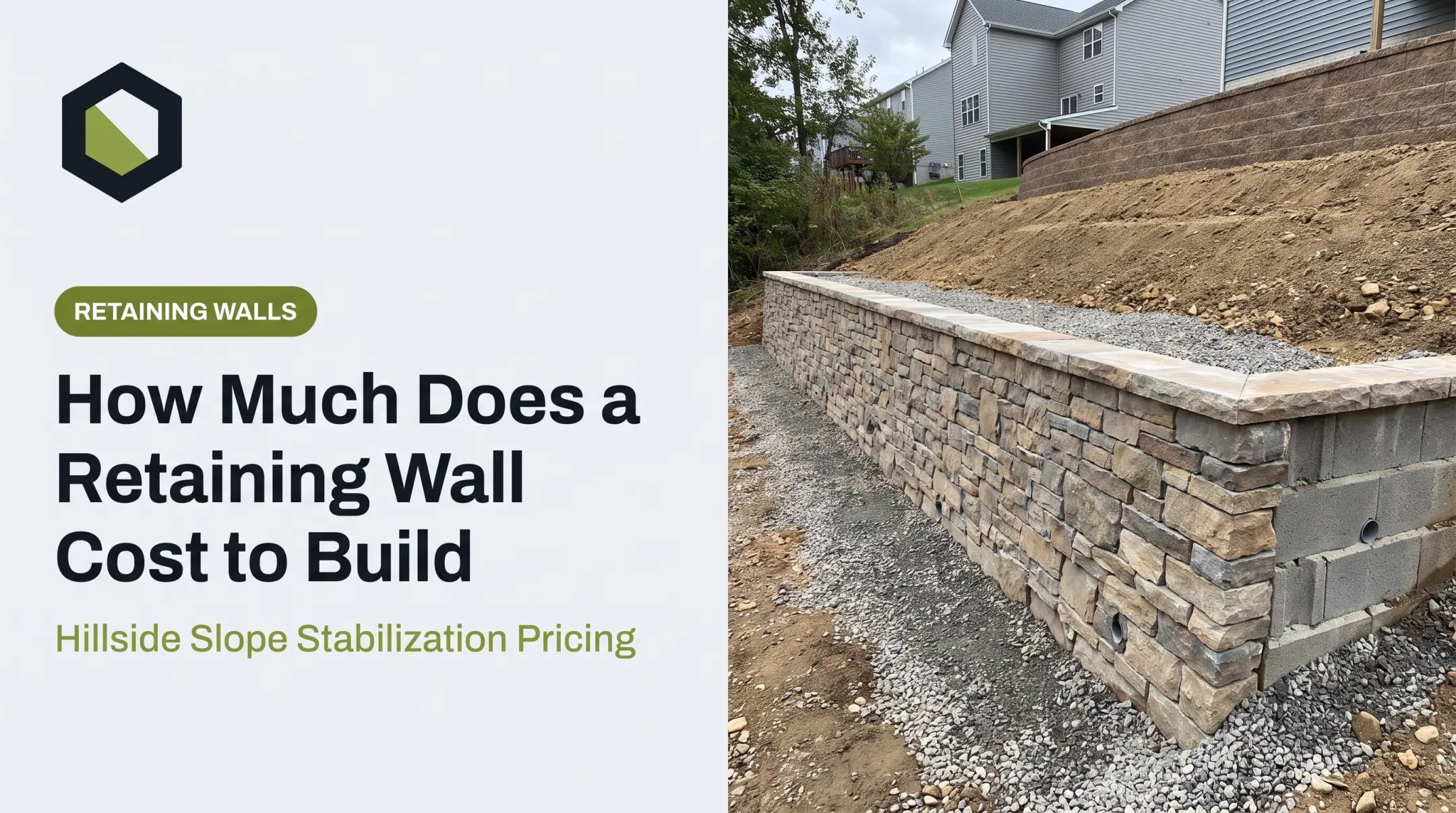
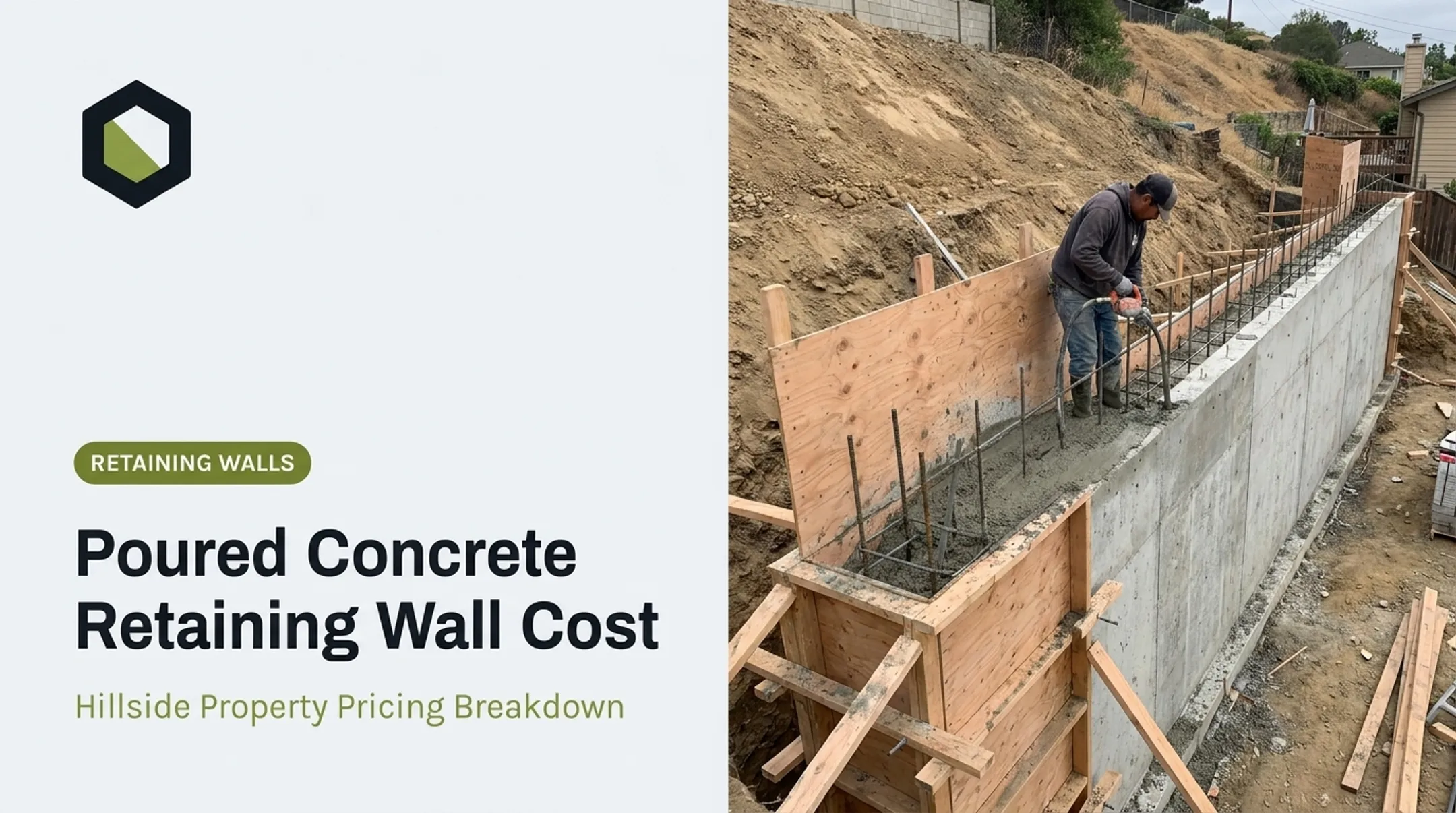
Chatsworth's rock-outcrop terrain and Agoura Hills' canyon-adjacent lots are good examples. Both often require engineered foundations or retaining walls before pool construction can even start.
Workmanship and Design Complexity
Nozzle technique, layer placement, and rebound removal all affect shell integrity. So does weather protection during curing. A rushed cure in hot, dry, or windy conditions increases shrinkage and cracking risk.
Complex features add coordination:
- Vanishing edges require surge tanks and separate circulation systems
- Attached spas and water features add plumbing complexity
- Tight access sites may need smaller equipment or hand excavation
Regulatory Requirements
Pool barrier codes vary by jurisdiction, but the 2024 International Swimming Pool and Spa Code sets baseline requirements many states adopt. It requires barrier heights of at least 48 inches above grade, with openings small enough to prevent a 4-inch sphere from passing through. Construction fencing during the build must be at least 4 feet high.
Rules vary by state, county, city, and HOA. Confirming local requirements before design finalizes saves rework later.
Common Issues, Misconceptions, and When Gunite May Not Be Appropriate
A few misconceptions are worth clearing up before you commit to gunite.
Gunite is not the finished waterproof surface. The shell is structural; plaster or another interior finish handles waterproofing. Seepage through gunite before plastering isn't automatically a sign of failure. It often traces to the shell's naturally uneven texture and typically resolves once the finish is applied.
Curing cannot be rushed. Small surface imperfections also don't automatically mean structural failure. If you notice cracking or unusual seepage after the pool is finished, have a qualified professional diagnose it rather than guessing.
Common Project Problems to Watch For
Before signing a contract, ask about:
- What's included versus what's an allowance (finishes, decking, landscaping)?
- Who handles drainage planning and plumbing pressure testing?
- How are trades sequenced, and who owns the schedule?
- What happens if site conditions change mid-build?
- Is curing time built into the schedule, or compressed?
Unclear allowances and poor trade coordination cause more disputes than the gunite itself.
When an Alternative Might Fit Better
Gunite isn't automatically the right call for every property. Fiberglass shells are pre-engineered and can sometimes be ready for use within days of delivery, though decking and equipment usually extend that timeline.
Vinyl-liner pools, according to Latham Pool's comparison of pool types, can often be installed in weeks rather than the months typical of concrete construction. Liners generally need replacement around every 10 years.
Concrete/gunite construction commonly runs 3 to 6 months from permitting through finishing. That timeline buys you shape flexibility that prefab options can't match.

Consider a different approach if:
- Your design doesn't need custom geometry (a standard rectangular shape, for example)
- Your site can't reasonably accommodate construction access
- Your budget doesn't account for engineering, drainage, and long-term upkeep
For hillside or complex Southern California properties, a coordinated design-build contractor can help avoid scope gaps. Stonework Design & Build evaluates the pool alongside grading, retaining walls, drainage, and hardscape as one project rather than four separate handoffs.
Conclusion
Gunite pool construction builds a custom, reinforced concrete shell by spraying a dry concrete mixture over steel, then curing, finishing, and completing equipment startup. Success depends on more than the material alone. These factors carry equal weight:
- Site assessment and engineering
- Drainage planning
- Reinforcement quality and application technique
- Clear project management
If you're weighing a gunite pool for a Los Angeles or Ventura County property, start with a site-specific scope rather than a generic estimate. Stonework Design & Build, based in Calabasas, CA, provides free on-site estimates and handles pool, retaining-wall, hardscape, and landscape construction under one contract across its established service areas. That single-contract approach reduces the handoffs where drainage and elevation problems tend to start.
Frequently Asked Questions
What is gunite in construction?
Gunite is a dry concrete mix sprayed pneumatically, with water added at the nozzle, over steel reinforcement. In custom pool construction, the term refers to the structural shell method—not the finished interior surface.
Which is stronger, gunite or shotcrete?
Neither label alone proves superior strength. What matters is mix design, reinforcement placement, application technique, curing, and inspection quality across the specific project.
Is gunite better than vinyl?
Gunite offers more shape customization and a durable structural shell; vinyl-liner pools typically cost less upfront and install faster. The better choice depends on your budget, design goals, maintenance tolerance, and timeline.
How expensive is a gunite pool?
Cost varies significantly based on size, design complexity, site access, excavation needs, permits, finishes, and added features like spas or water features. Request a site-specific, line-item estimate rather than relying on national averages.
Can water seep through gunite?
Yes, minor seepage through the shell before plastering is common and isn't automatically a sign of failure. The interior finish, not the gunite shell, provides the primary water seal, so persistent leaks warrant a professional diagnosis.
How thick should a gunite pool be?
Thickness is project-specific, set by design, engineering, soil conditions, and local code requirements. Always review the stamped structural plans for your project rather than relying on a single rule-of-thumb dimension.