Introduction
Bare soil on a slope doesn't stay put. Rain, runoff, wind and foot traffic carry it downhill, leaving gullies in the yard and sediment on paths, patios and lower areas.
Plants are the first tool most homeowners reach for. Roots bind soil, foliage softens raindrop impact, and stems slow shallow runoff once the planting is established.
This article compares five options (switchgrass, little bluestem, creeping juniper, red-osier dogwood and black willow) by root habit, site conditions, maintenance and regional fit. It also covers when planting needs drainage or structural help.
Key Takeaways
- Match the plant to slope, soil, sun, moisture, climate and mature size.
- Grasses, ground covers and suckering shrubs stabilize soil in different layers.
- Active gullies and slopes above structures need grading, drainage or engineered support.
- Check native status and invasiveness with local extension or native plant sources first.
Overview of Erosion-Control Plants in U.S. Residential Landscapes
Erosion control planting means using vegetation to reduce soil loss from rainfall, runoff, wind and minor disturbance. In a residential yard, that mostly means slopes, banks and drainage edges.

Plants work in several ways, according to UC ANR guidance:
- Roots bind soil and rock together.
- Leaves and branches shield soil from raindrop impact.
- Surface litter slows rain and promotes infiltration.
- Roots take up water that would otherwise saturate the slope.
Surface cover doesn't address every failure. Saturation, undercutting and loading the top of a slope can still move soil.
Region matters too. A plant that thrives on a wet streambank in the Southeast may fail on a dry western hillside. Each of the five plants below should be checked against local native status, invasiveness lists and your actual site conditions.
Best Plants for Erosion Control in U.S. Landscapes
These plants suit residential slopes and banks when root strength or spreading habit, site fit, maintenance load and regional alternatives all line up. This is not a universal ranking for every state.
Switchgrass (Panicum virgatum)
Switchgrass is a warm-season bunchgrass with fibrous roots and slowly spreading rhizomes. Established stands hold soil on sunny slopes, and the standing stems add winter surface cover.
Verify before planting:
- Full sun; partial shade makes growth loose and floppy
- Moist clay or sand preferred, with drought and occasional flooding tolerated
- Height of roughly 3-4 ft of foliage, up to 7 ft with plumes
- Spring seeding when soil is above 60°F
- Cutback in late winter or early spring
Profile: NC State lists erosion resistance but also rates switchgrass highly flammable and advises against planting it within home defensible space. USDA excludes California and the Pacific Northwest from its native range. Don't treat it as a quick fix for active runoff channels.
Little Bluestem (Schizachyrium scoparium)
Little bluestem suits sunny, dry-to-medium, well-drained slopes where a deep, fibrous root network matters more than a mown look. It forms clumps 2-4 ft tall with equal spread and tolerates low fertility and clay.
Site limits to confirm:
- Good drainage; it dislikes wet feet
- Slow establishment from seed (about two years to full height)
- Late-winter cutback, with mulch kept off the crown
- Native range centered on eastern North America
- Seasonal appearance and fit with nearby ornamentals
Profile: NRCS documents erosion-control use and dry, steep-slope habitat, and reports little injury when burned while dormant. That isn't an ignition-safety rating, so keep it clear of structures in fire country.
Creeping Juniper (Juniperus horizontalis)
This trailing evergreen mat reaches 0.5-1.5 ft tall and 5-8 ft wide. It shields exposed soil year-round and suits sunny, dry, sandy or rocky slopes in USDA zones 3-9, according to Missouri Botanical Garden.
Don't pick it for fast coverage alone:
- Wet, poorly drained soil causes root rot
- Wisconsin Extension flags severe Phomopsis tip blight
- LA County Fire's 2023 guide says to remove junipers within 10 feet of any structure
- Native range is Alaska, Canada and the northern U.S.
Profile: Best for dry, drained slopes away from buildings in cooler or non-fire-prone regions.
Red-Osier Dogwood (Cornus sericea)
A deciduous, suckering shrub that spreads by underground stolons into thickets. It reaches 6-9 ft tall and 7-10 ft wide, takes full sun to partial shade, and handles fluctuating water tables.
That makes it useful for streambanks, rain gardens and damp slopes. It is not a dry-slope plant. CNPS lists high water needs and wetland-riparian habitat.
Check before planting:
- Drainage and available space
- Spread near paths, utilities and neighboring plants
- Removal of unwanted suckers
- Optional early-spring removal of 20-25% of the oldest stems for colorful new growth
Profile: Native across northern and western North America, with documented use along streams and wetland edges.
Black Willow (Salix nigra)
Black willow answers the tree question for wet sites. NRCS documents it for eroding streambanks, with dense, fibrous, superficial roots and easy establishment from cuttings.
The limits are serious:
- Grows 30-60 ft with a broad crown
- Moisture-seeking roots can threaten foundations, septic systems, utilities and drains
- Maryland Extension advises no trees within 50 ft of drainfields (25 ft for some shallow-rooted trees), though that isn't willow-specific
- California requires notifying CDFW before work that alters a bed, channel or bank, including seasonally dry waters
Profile: Native from New Brunswick to Florida and Texas, but southern California suitability isn't established. On drier or smaller residential slopes, choose shrubs or grasses instead.

How We Chose the Best Plants
We weighed these factors when selecting plants:
- Erosion-control function
- Site compatibility
- Native or non-invasive status
- Establishment reliability
- Maintenance needs
- Mature size and fit with residential property
Popularity and looks didn't count.
Assess the Site First
Record these conditions before you choose plants:
- Slope angle, bare soil or active movement
- Concentrated drainage paths
- Soil texture, sun and seasonal moisture
- Irrigation availability
- Distance to buildings, utilities, paths, pools and property lines
Then check state extension guidance, USDA PLANTS, local native plant societies and invasive-species lists such as Cal-IPC.
Combine Plant Types
- Grasses and sedges reinforce surface soil with fibrous roots
- Ground covers protect the surface
- Shrubs add layered woody growth
- Trees fit only where roots, canopy and water needs suit the site
Mixing compatible species improves coverage and seasonal resilience. Avoid planting so densely that you block drainage access.
Know When Plants Aren't Enough
UC ANR's homeowner screening uses percent grade:
| Slope grade | Typical approach |
|---|---|
| Below 33% | Plants plus mulch can control runoff |
| 33-50% | Add blankets, coir mats or jute netting during establishment |
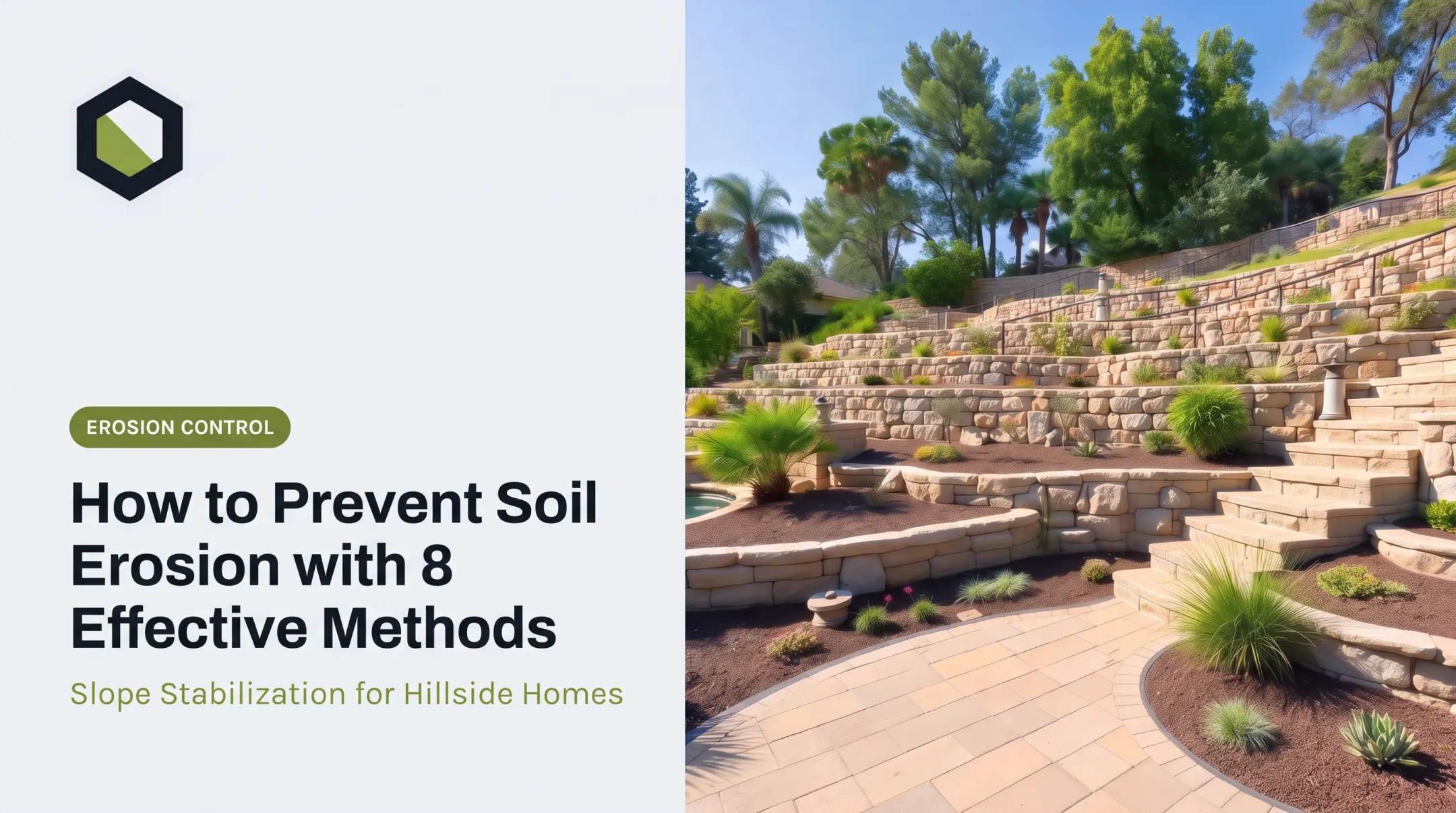
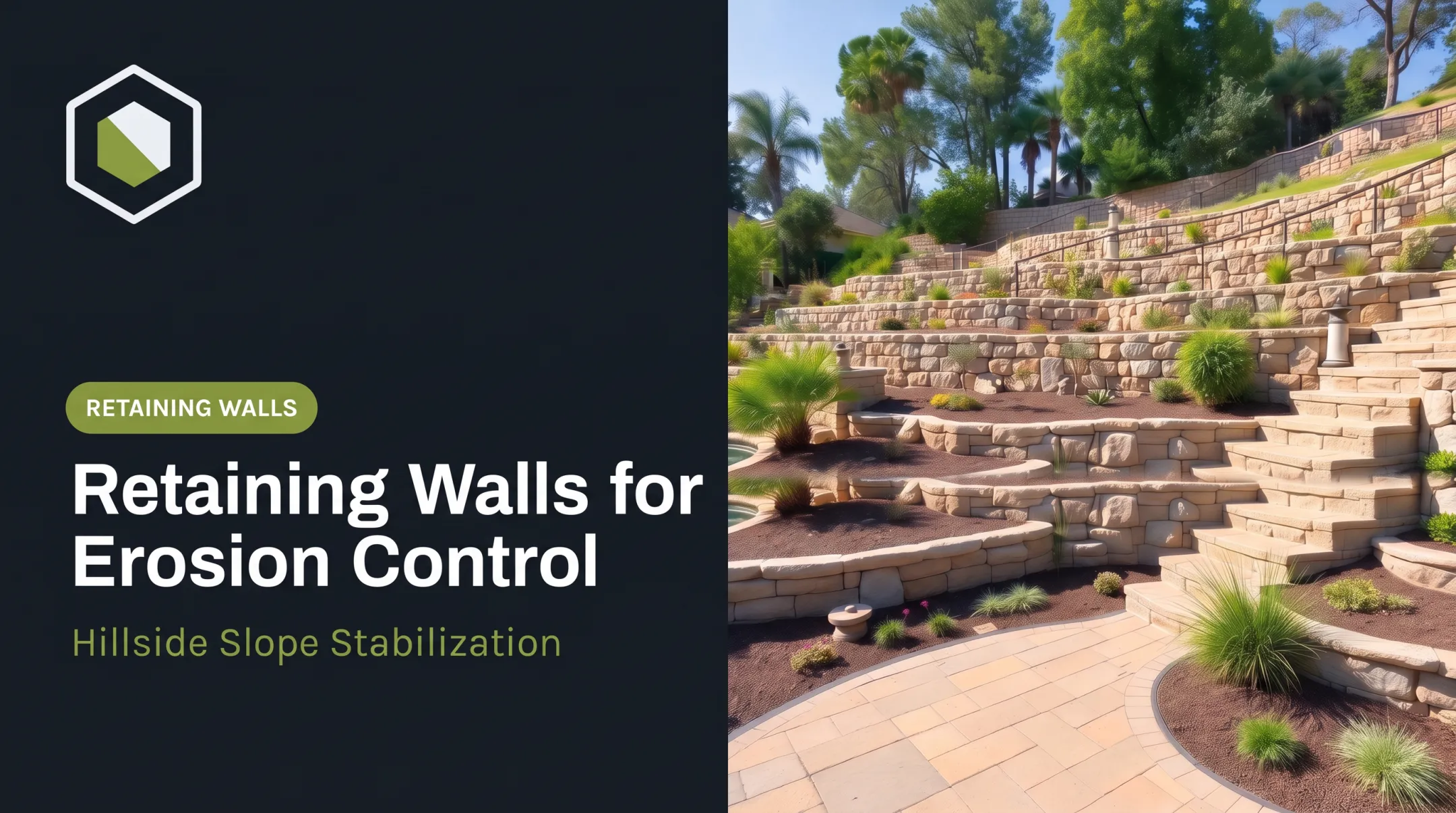
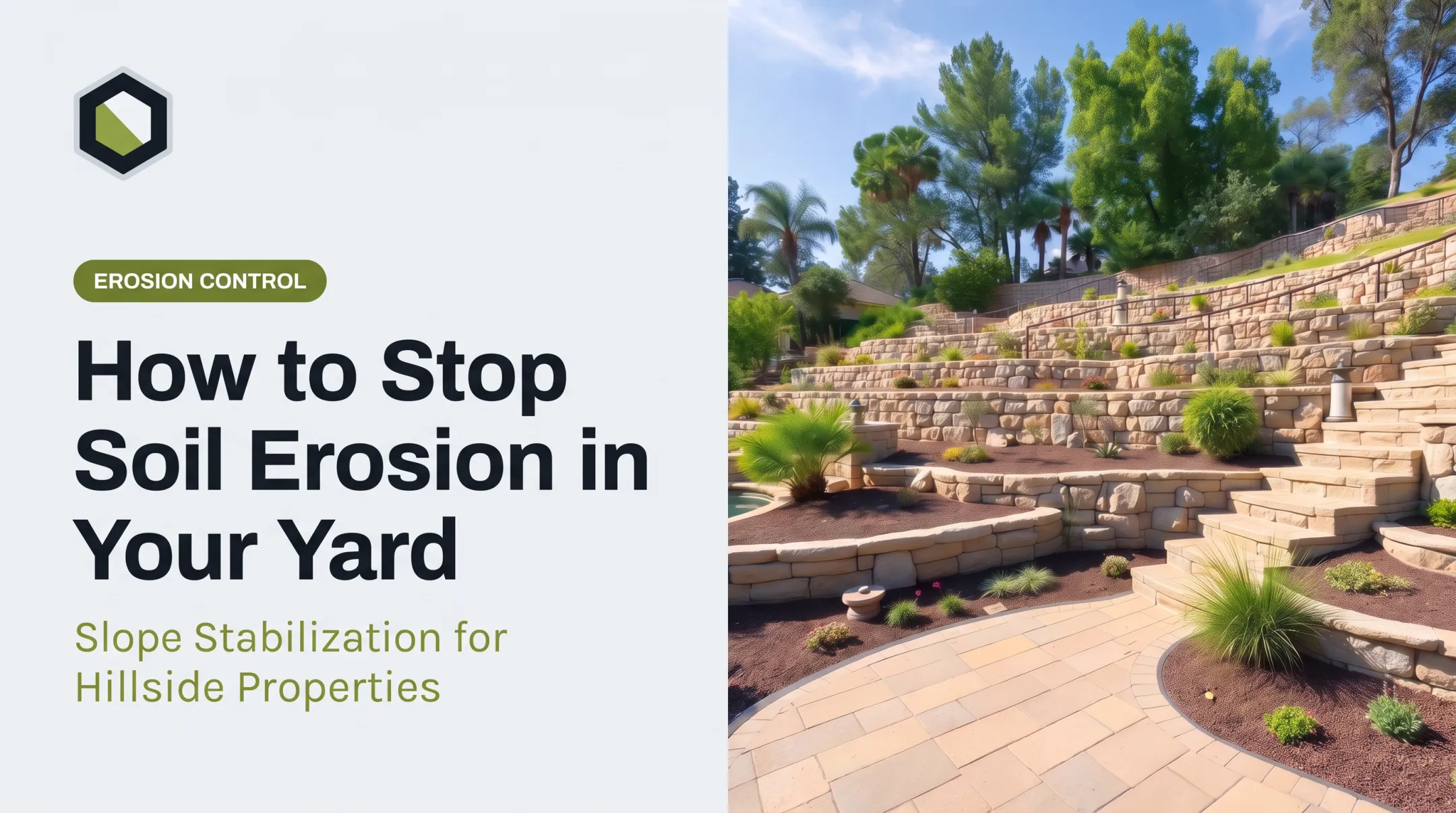
| Above 50% | Structures such as retaining walls and terracing |
This is screening, not engineering approval. Add drainage when runoff concentrates, and expect permits: LA County lists grading and retaining walls among work that generally needs them. Burned hillsides are riskier still, since USGS notes even modest storms can trigger debris flows.

For Southern California readers, Stonework Design & Build can assess hillside planting alongside retaining walls, hardscape and drainage for homes in Los Angeles and Ventura counties. Their site walk evaluates grade, drainage, access, setbacks and utilities before any design begins. In most local jurisdictions, walls over roughly 3-4 feet, or any wall holding a surcharge, need engineered drawings and a permit.
Conclusion
The best erosion-control plant matches your site's moisture, sun, slope and climate, with roots and mature size that fit the space. Fix the source of runoff, protect new plantings while they establish, and avoid invasive species.
If soil is actively slipping or the slope sits near a structure, get a professional assessment.
Hillside and residential owners in Los Angeles and Ventura counties can contact Stonework Design & Build at (818) 923-4026 for a free on-site estimate when planting must be coordinated with retaining walls, drainage, grading or hardscape.
Frequently Asked Questions
What are some ways to prevent soil erosion?
Combine vegetation and mulch with erosion-control blankets, runoff management, grading and drainage improvements. Steeper slopes may need terracing or engineered retaining walls.
What plants help prevent erosion?
Fibrous-rooted grasses and sedges, suitable ground covers, spreading shrubs and site-appropriate trees all help. Choose regionally native, non-invasive species.
Which tree is best for erosion control?
No tree is best everywhere. Black willow may suit some wet banks, but mature size, roots, moisture, utilities and local climate decide the choice.
How do plant roots help prevent soil erosion?
Fibrous, rhizomatous and woody roots physically bind soil particles and rock. That improves cohesion and reduces soil carried off by shallow runoff.
How do trees help prevent soil erosion?
Canopies intercept rain and soften its impact, while roots reinforce soil and take up water. Trees alone may not stabilize an actively failing slope or concentrated drainage.
Can plants prevent soil erosion?
They reduce surface erosion once established. Severe runoff, gullies or structural slope failures also need drainage and stabilization measures.