No single product fixes that. Lasting erosion control combines diagnosis, soil cover, vegetation, drainage and, on some sites, structural support.
This guide covers how to find the cause, which prevention methods work, how to stabilize slopes, what to plant, and when to call a professional.
Key Takeaways
- Trace where runoff starts, keep soil covered, and slow water before it speeds up.
- Deep-rooted plants can stabilize mild erosion; severe movement needs a designed fix.
- Match walls, grading, drains and blankets to your slope, soil and local rules.
- Never send concentrated runoff toward a foundation, neighbor, walkway or unstable ground.
Why Erosion Happens and How to Spot It
Rain and irrigation water knock soil particles loose. Bare and compacted ground sheds water instead of absorbing it, and erosion worsens as slopes get steeper and longer.
Common causes in residential yards:
- Intense rainfall hitting bare or recently disturbed soil
- Concentrated runoff from steep grades or hardscape
- Compacted ground that won't absorb water
- Leaking or overspraying irrigation
- Gutters and downspouts that dump water in one spot
Early Warning Signs
Erosion progresses in stages. According to University of Delaware Extension, splash erosion dislodges particles, sheet erosion strips soil across a surface, rills form small channels, and gullies are rills that have widened and deepened.
Watch for:
- Thin channels or small gullies
- Exposed roots or stones
- Sediment piling up at the base of a slope
- Mulch that keeps disappearing
- Muddy runoff and standing water
- Soil splashed onto walls or windows
- Newly uneven ground
Inspect During and After Rain
Walk the yard while it's raining, then again afterward. Follow the water from where it starts to where it ends up. Does it come off a roof, a patio, an irrigation zone, a neighbor's lot, or a naturally steep area? Knowing the source tells you what to fix.
When Erosion Becomes a Structural Problem
Pay closer attention if soil loss undermines a patio, walkway, pool, fence, foundation or existing retaining wall. The USGS lists new ground cracks, bulges, seepage, tilting trees, sticking doors and foundation separation as signs of slope movement. Those are more than lost topsoil.
Photograph the changes, note the dates, and get an assessment. Covering the symptoms won't help.
How to Stop Soil Erosion in Your Yard
Keep Soil Covered
Bare soil is the most vulnerable. Use healthy turf, groundcovers, planted beds, mulch or gravel, and stabilize any bare area before the next major rain. Straw protects newly seeded areas, and temporary erosion-control products fill the gap while plants establish.
Help Water Soak In
Less runoff means less erosion. Start with these fixes:
- Relieve compaction with core aeration and compost
- Correct irrigation overspray and leaks
- Repair gutters
- Extend downspouts onto grass, mulched beds or splash blocks
- Add absorbent planted areas where water collects
Slow and Guide Water
Gentle grading, shallow swales, berms and stone-lined channels can slow and spread flow. A Santa Cruz County homeowner drainage guide describes swales that slow, spread and soak in low flows. The same guide advises consulting an expert before drainage work on or near steep slopes.
Warning: drainage features should release water safely. Don't concentrate it at a property edge or against a foundation.
Mulch, Rock and Blankets
Each has a role:
- Mulch protects planted beds, but loose material can wash out under concentrated flow.
- Rock suits defined flow paths.
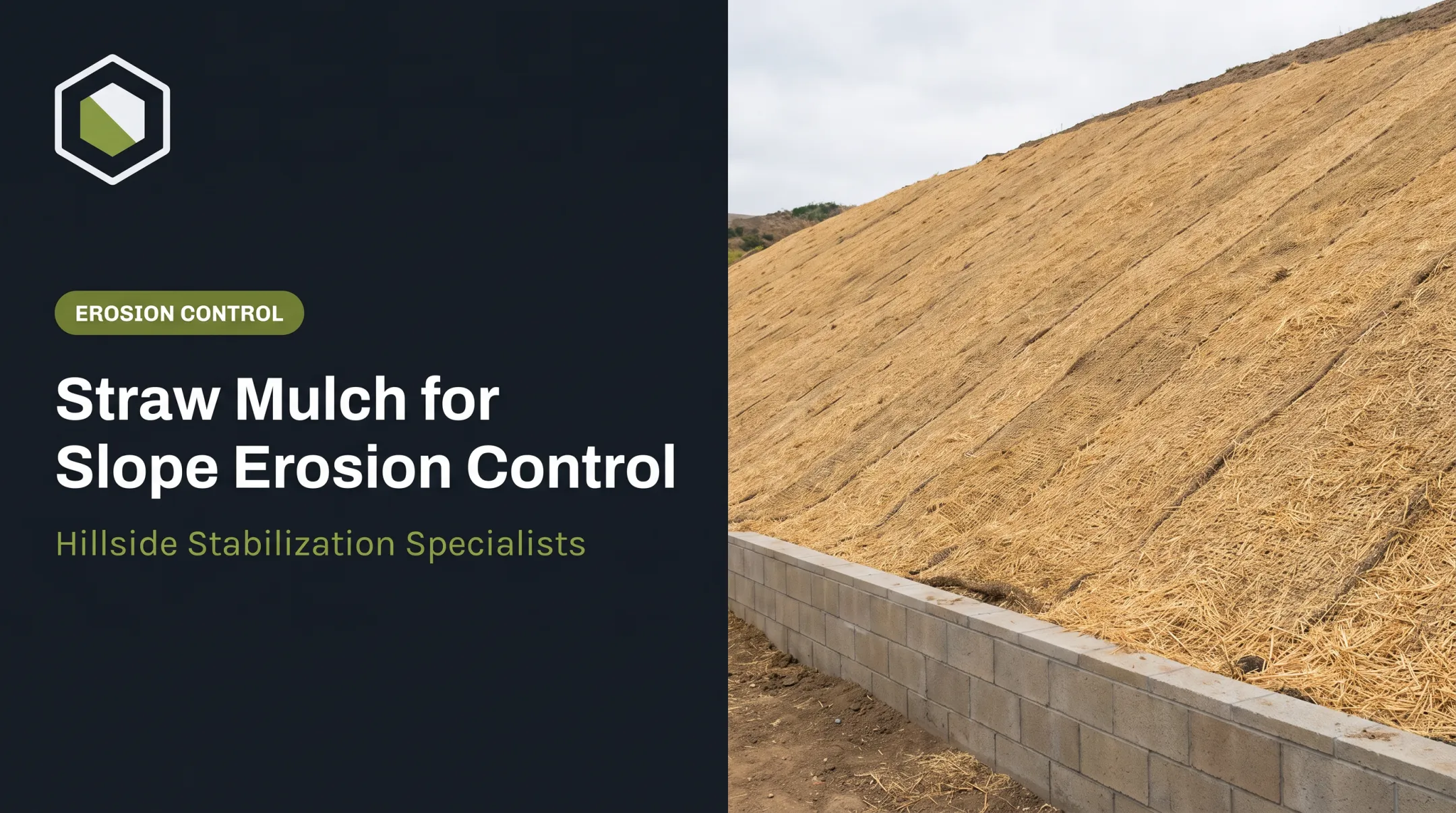
- Erosion-control blankets hold exposed soil until plants take hold. Install them following the slope, not against it.
A Restoration Sequence for Damaged Areas
- Remove unstable debris.
- Fix the water source first.
- Repair or replace displaced soil.
- Stabilize the surface with cover.
- Establish plants or turf.
- Check the area after each storm.

How to Stop Erosion on a Slope
Gravity speeds up runoff on slopes. Water follows predictable channels, and weakly rooted soil can move downhill quickly.
Plant in Layers
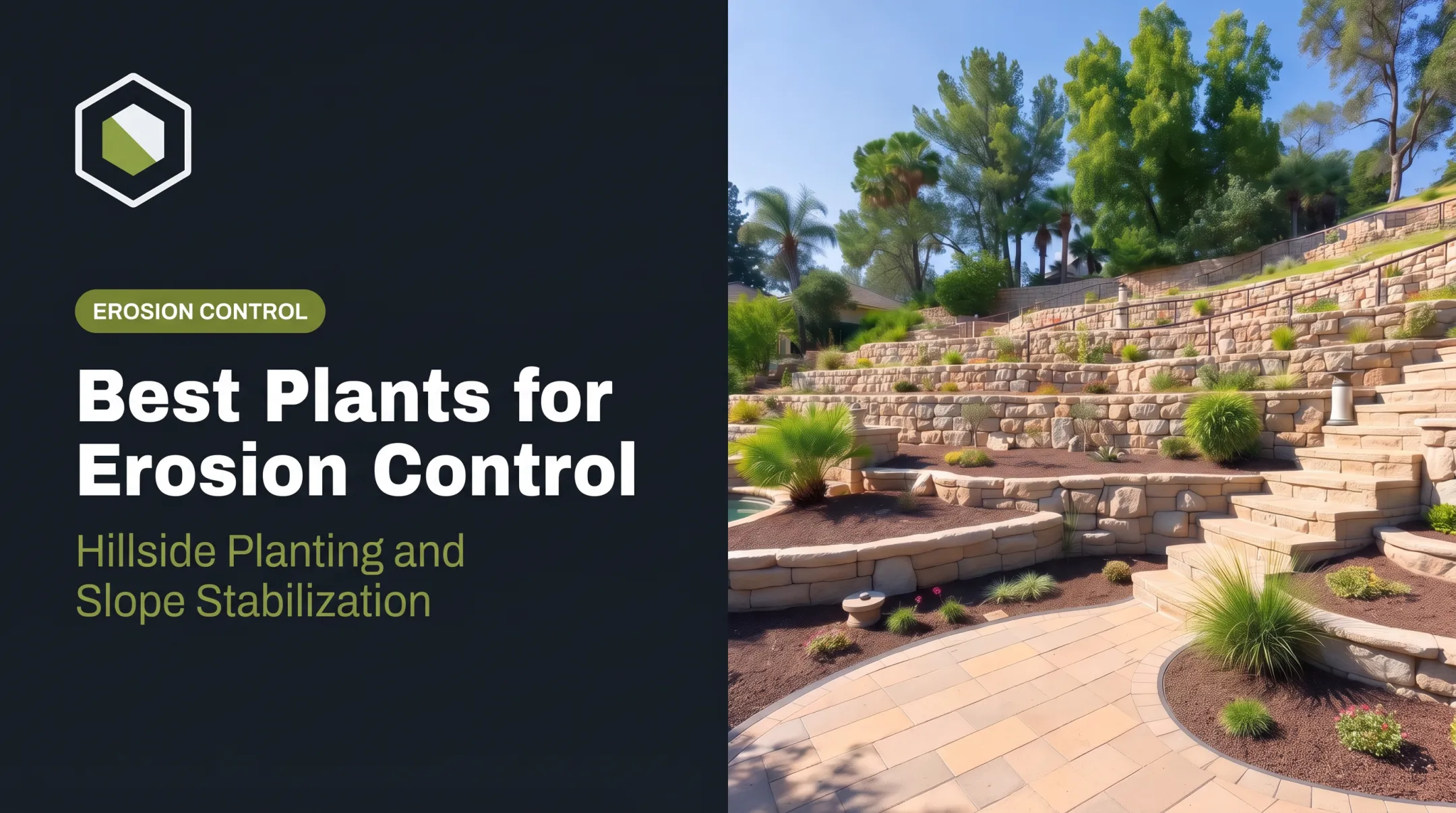
For mild to moderate erosion, combine groundcovers, grasses, shrubs and other climate-appropriate plants. Their roots occupy different depths while the surface stays covered. Mississippi State Extension reports that taller grasses, wildflowers, shrubs and trees slow runoff better than lawn grass. Plant across the contour, not up and down the hill.
Terrace or Contour
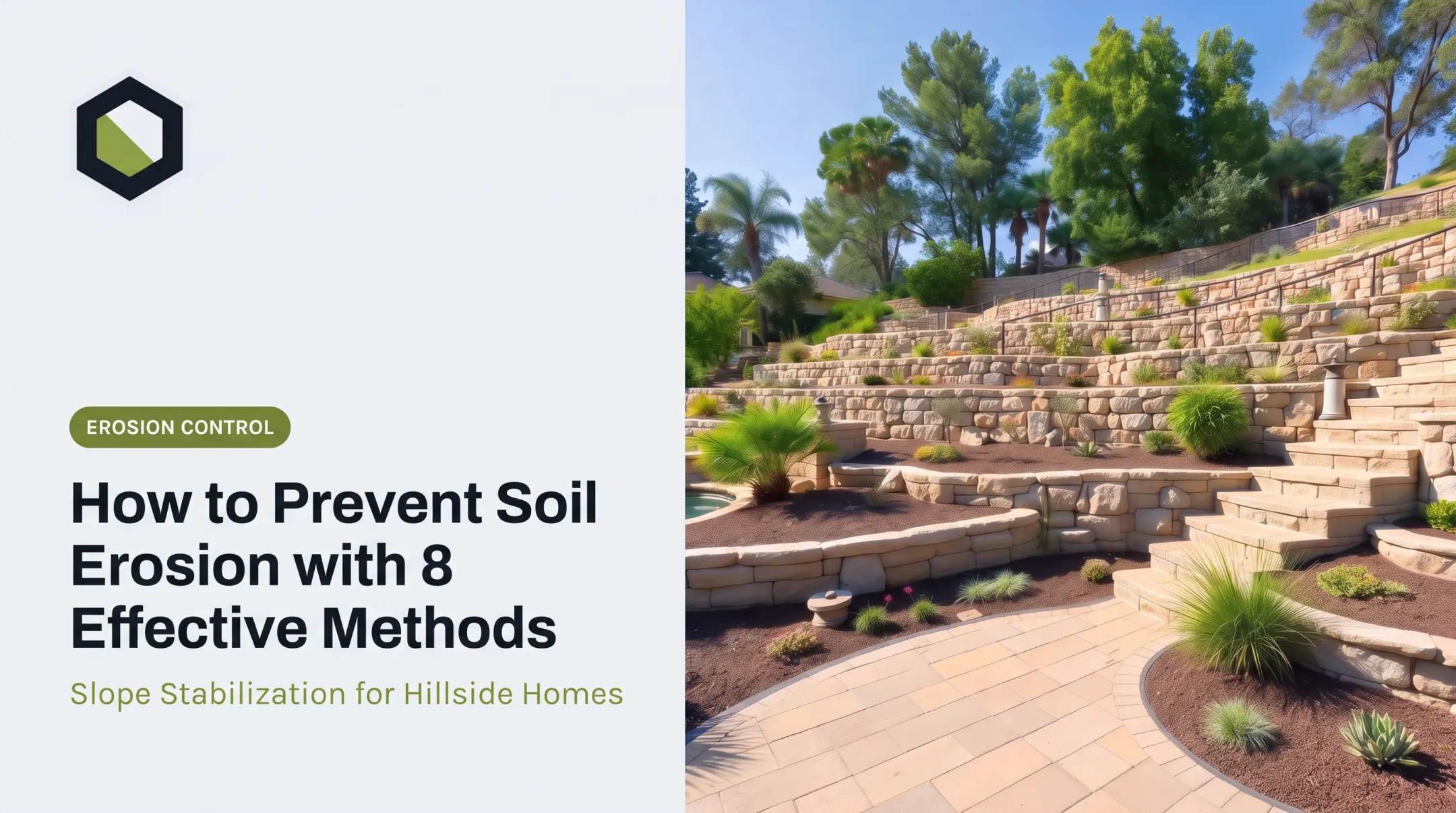
Terracing breaks one long slope into shorter sections that slow water and give you manageable planting areas. Terraces still need stable edges and planned drainage.
When a Retaining Wall Makes Sense
Consider one when you have:
- Substantial grade separation
- Recurring soil movement
- Lost usable yard space
- Undermining near structures
- A slope too steep for planting alone
Permit rules vary by county. In Los Angeles County, a wall of 4 feet or less (measured from the bottom of the footing to the top of the wall) is generally exempt from a building permit.
Ventura County's 2025 code sets 3 feet, measured from lower-side finished grade. Surcharge loads remove the exemption in both. Grading has its own permit rules, and a grading permit doesn't cover walls.

Temporary Support for New Slopes
Blankets, geotextiles, check structures and temporary diversions help newly graded or sparsely vegetated slopes while plants establish. They don't replace a fix for major drainage or structural problems.
Choosing Materials and Plants for Erosion Control
Match Material to Site
| Site condition | Best option |
|---|---|
| Planted beds | Organic mulch |
| Defined flow paths | Rock or gravel |
| Exposed soil awaiting plants | Erosion-control blanket |
| Engineered grade change | Retaining-wall materials |
When you use blankets or mesh, compare the netting type as well as the fill. Los Angeles County's 2024 homeowner guide describes coconut-fiber mesh as lasting several years and jute as lasting about one year, both for slopes under 50%.
Choose Plants for Roots, Not Looks
Match plants to the site by:
- Root structure and mature size
- Sun, soil moisture and drought tolerance
- Maintenance needs and regional suitability
Many trees root deeper than most groundcovers, so surface coverage alone says little about holding power.
Southern California options include:
- Dwarf coyote brush, which UC Master Gardeners list for slope erosion control
- 'Bees' Bliss' sage
- California buckwheat
Avoid invasives such as iceplant, ivy and vinca major. Verify choices with your local extension office or a qualified horticulturist.
A layered scheme is more resilient than a single lawn or one species. If one plant fails, the others keep holding soil.

Establishment Care
New plants need help until roots take hold:
- Water without creating runoff
- Protect them from foot traffic
- Control weeds and replace failures before bare areas spread
Even drought-tolerant natives need regular water at first, then less over time.
A Simple Decision Guide
- Early, localized erosion: plants and surface cover
- Water is the driver: add drainage measures
- Threat to buildings, hardscape, property lines or a steep hillside: get design or structural advice
When to DIY or Call a Professional
Reasonable DIY Tasks
- Fixing minor irrigation problems
- Repairing a downspout extension
- Adding mulch
- Reseeding small bare patches
- Planting groundcover once the area is confirmed stable
Call a Professional For
- Recurring washouts
- Visible slope movement
- Collapsed or cracking walls
- Erosion near a foundation or pool
- Standing water that persists
- Major grading changes
- Runoff crossing property boundaries
If you're in an HOA, check your governing documents before making physical changes.
Help in Los Angeles and Ventura Counties
Stonework Design & Build handles grading, drainage, engineered retaining walls, hardscape and planting under one contract for homeowners in Los Angeles and Ventura counties.
The team has more than ten years of experience, is licensed, insured and bonded, handles permitting in-house, and offers free on-site estimates.
The right solution depends on elevations, soil, drainage paths, existing structures and how you use the yard. Request a site-specific assessment before committing to a fix.
Frequently Asked Questions
What are the signs of soil erosion in my yard?
Look for rills, gullies, exposed roots, disappearing topsoil or mulch, sediment deposits, muddy runoff, standing water, and shifting landscape features.
How do I hold back soil on a slope, and when is a retaining wall needed?
Vegetation, mulch, blankets, terracing and drainage can handle mild erosion. Large grade changes, ongoing soil movement or risks to structures call for a properly designed retaining wall.
Can soil erosion in my yard be reversed?
Often, once you address the water source. Severe instability or undermining may need grading, drainage or structural repairs.
What are effective ways to prevent soil erosion in my yard?
Keep soil continuously covered, plant deep-rooted species, control drainage, fix irrigation, and keep grading stable. Use mulch or rock where suitable and repair bare spots quickly.
What materials and plants can I use to prevent soil erosion on a slope?
Blankets, mulch, gravel, groundcovers, grasses and shrubs all work. Choose based on the slope's sun, soil, moisture, maintenance needs and regional suitability.
What are the best landscaping ideas for a hillside to prevent soil erosion?
Layered planting, contour beds, terraces, properly drained retaining walls and stone channels work well. Design paths so they don't concentrate runoff.