The visible damage is rarely the real problem. Bare soil, concentrated runoff, poor grading, compaction, or an unstable slope is usually behind it, and patching the damage without finding the source means repairing it again next season.
Below are eight prevention methods. Mulch and plants can handle mild erosion. Steep or actively failing slopes need coordinated drainage, grading, or structural work.
Key Takeaways
- Exposed soil, fast runoff, long slopes, and sparse vegetation drive most erosion.
- Good prevention covers the soil, slows water, spreads runoff, and stabilizes slopes.
- Mulch, plants, blankets, and permeable surfaces fix many residential problem areas.
- Terraces and retaining walls must be designed with drainage, not alone.
- Inspect after storms and fix small rills before they become gullies.
Common Causes of Soil Erosion
Erosion usually traces back to one or more root problems: unprotected soil, water moving too fast, poorly shaped land, or vegetation that can't hold the ground.
What Is Soil Erosion?
The USDA's Natural Resources Conservation Service defines it as the detachment and transport of soil particles by rainfall, runoff, irrigation, or wind. Runoff is just moving water. It becomes erosion when it picks up soil, especially when it concentrates or crosses bare ground.
Erosion shows up in stages:
- Sheet erosion: a thin, fairly uniform layer lost
- Rills: small channels
- Gullies: deeper channels from concentrated flow
- Sediment deposits and soil washed out around plants, paths, and walls
Bare or Disturbed Soil
Raindrop impact on unprotected soil starts most water erosion. Construction, grading, clearing, over-mowing, and dead vegetation all leave topsoil exposed.
Common scenarios: a freshly cleared hillside, a lawn worn down by foot traffic, or a bed left uncovered while a project sits paused.
Concentrated Stormwater Runoff
Downspouts, driveway runoff, clogged drainage routes, and hard surfaces funnel water into narrow channels. Faster water carries more soil.
Watch for muddy discharge, sediment at the bottom of a slope, and a visible flow path after rain. Those mean runoff needs redirecting or slowing.
Steep or Long Slopes
Slope length and steepness both increase soil loss, according to NRCS erosion guidance. Water gains energy as it runs downhill, so rills, gullies, and undercut areas appear where there's no surface protection.
Contouring, swales, terraces, and planting zones can break up that run.
Compaction, Poor Grading, and Vegetation Loss
Compacted soil absorbs less water. Poor grading sends runoff toward vulnerable spots instead of dispersing it.
Typical triggers include vehicle traffic, tree or shrub removal, drought or wildfire damage, and dead plants that leave soil bare. In Southern California, short wet winters follow long dry summers, so stressed slopes face intense rain right when cover is thinnest.

What Happens If Soil Erosion Is Ignored
Untreated erosion strips fertile topsoil, exposes roots, and cuts unstable channels. Sediment also ends up in storm drains and waterways; the EPA lists it among the most common stormwater pollutants.
Recovery is slow. Soil forms over long timescales, so lost topsoil is hard to replace.
Severe cases threaten:
- Patios, walkways, and pool areas
- Foundations and fences
- Retaining walls
Los Angeles County's homeowner guide warns that deep ponding and saturation can cause severe property and foundation damage. The right response depends on cause and severity, and repair costs rise the longer the problem is left alone.

Warning Signs You're About to Experience Soil Erosion
Early signs are your chance to fix drainage or surface cover before a small flow path becomes a channel or slope failure.
- Muddy or discolored runoff after rain, with sediment collecting at the bottom of the yard
- Small rills, widening channels, disappearing mulch, or exposed roots
- Soil piling against a curb, wall, or drain
- Pooling water, bare saturated patches, or undermined hardscape
- Slope cracks, settling, or leaning fences
Cracks, settling, or earth slippage call for a state-licensed geotechnical engineer or engineering geologist, not a weekend fix.
How to Prevent Soil Erosion
Prevention combines four moves:
- Keep soil covered
- Slow and spread water
- Protect newly exposed areas
- Stabilize slopes when plants alone won't do it
Choose methods based on slope steepness, soil type, drainage pattern, existing damage, access, planting goals, and whether the work touches a structure or property line.
Keep Soil Covered With Vegetation and Mulch
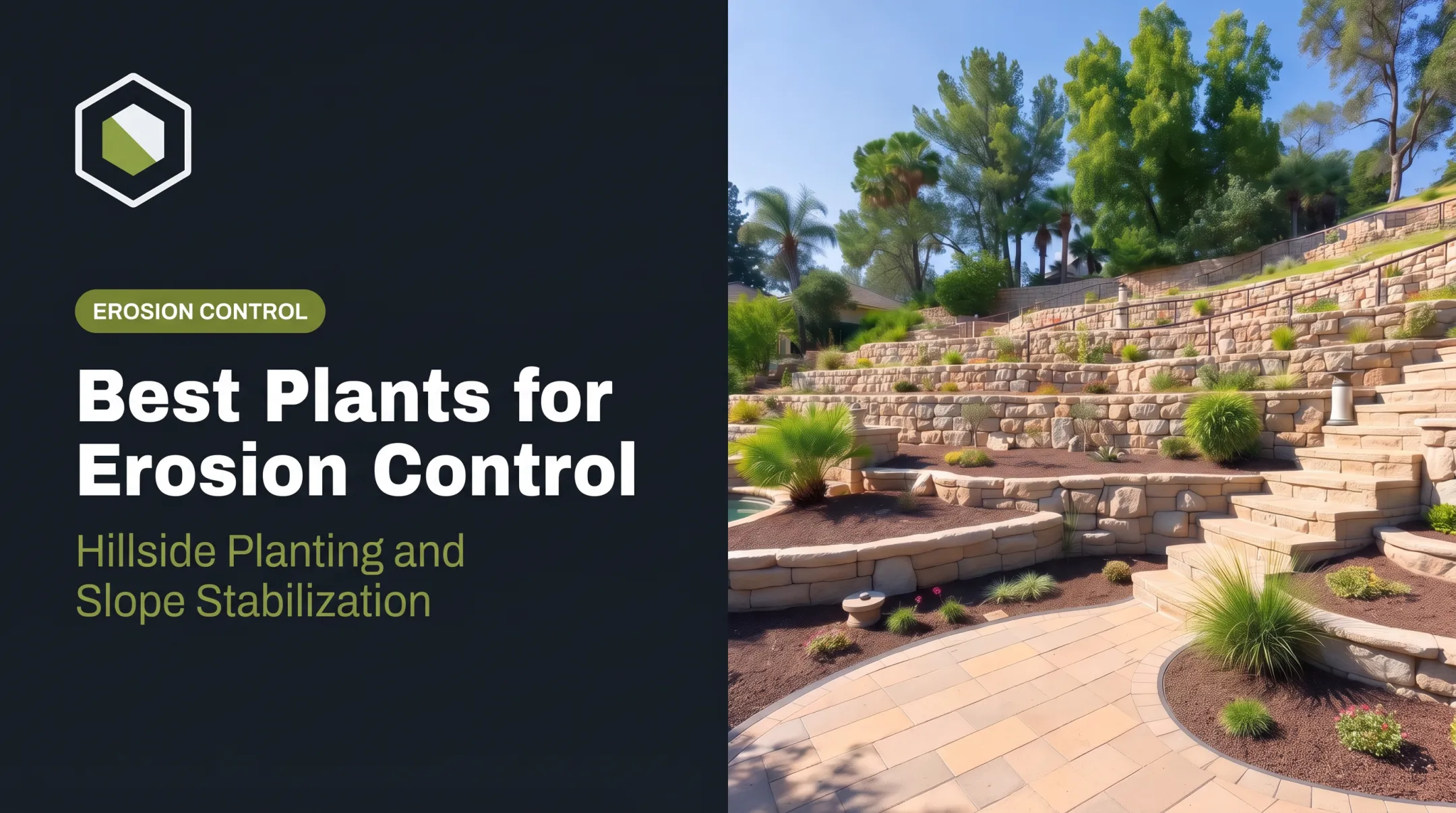
Method 1: Maintain living plant cover. Foliage cushions rainfall while roots bind soil. UC Master Gardeners point to creeping groundcovers that root along the surface as especially useful on hillsides.
Pick plants suited to the site's sun, moisture, slope, and upkeep. Use this first for bare beds, mild surface erosion, and slopes where plants can establish without washing out.
Method 2: Apply mulch. Wood chips, shredded leaves, and similar organic material reduce raindrop impact and slow shallow runoff while plants take hold. UC guidance suggests a settled depth of 2 to 4 inches for beds. Keep mulch off drains and away from structures.
In wildfire zones, UC ANR advises eliminating combustible mulch within 5 feet of the home. Mulch is ideal right after planting, during renovations, or wherever cover is sparse.
Protect Newly Exposed or Vulnerable Soil
Method 3: Install erosion-control blankets, coir mats, or geotextiles. These hold surface soil while vegetation develops, which helps where seed or loose soil would wash away. Anchoring matters, as does product selection. Follow manufacturer instructions, especially on steep slopes or concentrated flow. Net-free or biodegradable options are safer for wildlife than plastic netting.
Method 4: Use gravel, rock, or permeable paving. In high-traffic or hard-to-vegetate spots, a stable surface reduces bare soil and spreads foot traffic or light runoff. Designed permeable pavement lets water infiltrate, though clogging is a common maintenance issue. Grade and contain the surface so it doesn't just shift fast water onto another part of the property.
Slow and Spread Water Before It Reaches the Slope
Method 5: Regrade with contours, swales, or berms. These features slow water, spread it wide, and encourage infiltration instead of letting one channel cut into the slope. Grading must never push water toward a foundation, a neighbor, or a wall without drainage.
Method 6: Redirect roof and surface runoff. Use planned downspout outlets, drainage channels, or rain gardens so water discharges where it can slow and soak in, not onto bare soil. Rain-garden guidance recommends siting at least 10 feet from foundations.
Check drainage after storms. Get professional advice when runoff crosses property lines, affects structures, or needs major excavation.
Break Up or Stabilize Steep Slopes
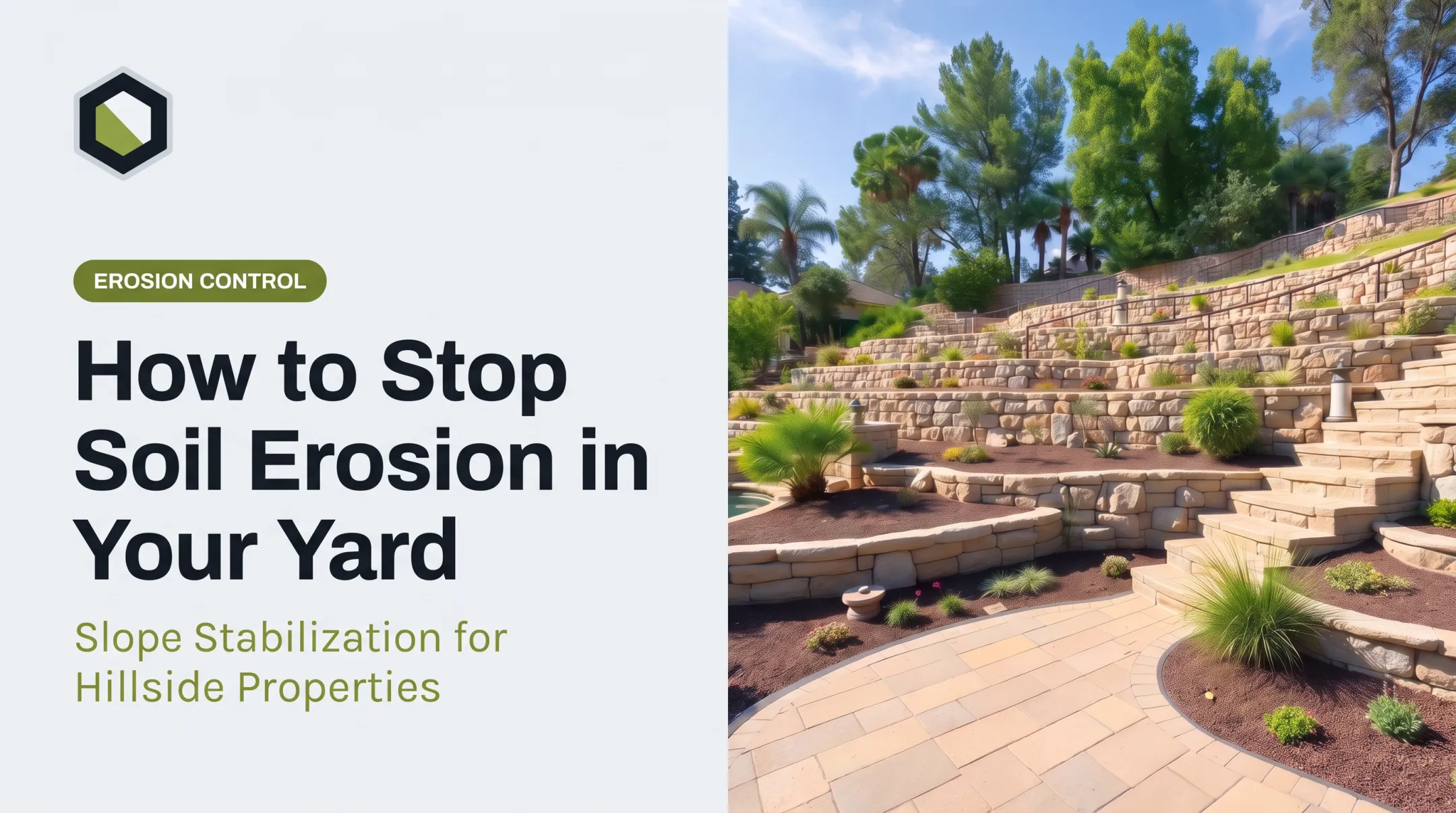
Method 7: Build terraces or stepped planting areas. Terraces shorten the uninterrupted slope, cutting the distance and energy of downhill flow, and they create level spots for plants or mulch. Plan the layout, overflow routes, soil stability, and maintenance access before building.
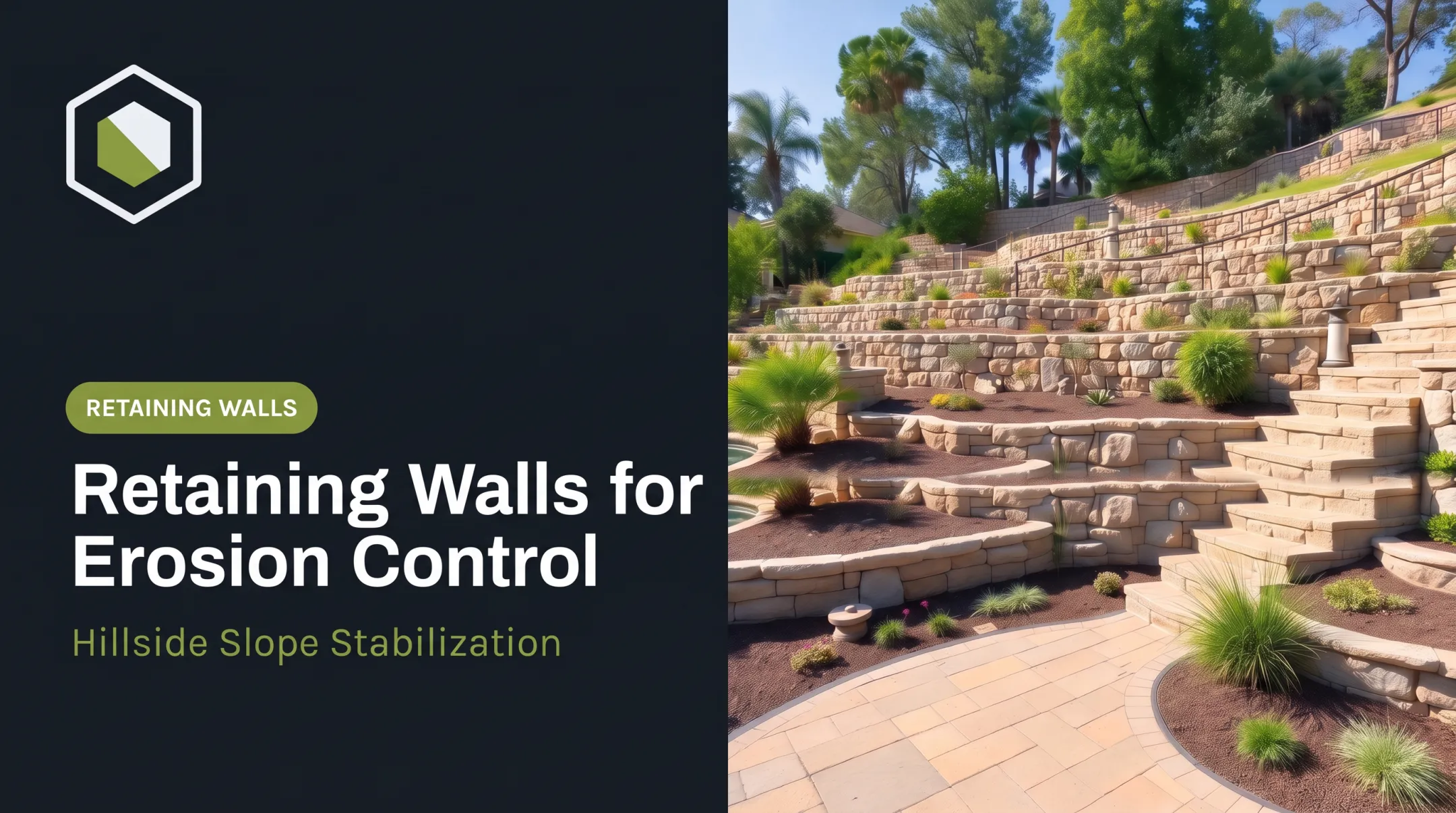
Method 8: Install an engineered retaining wall. Walls hold back soil and create usable level areas, but they need proper footings, backfill, drainage, grading, and an outlet for collected water. Design may involve engineering and permits. Walls are not a DIY fix for active slope movement.

Permit rules vary by jurisdiction. Los Angeles County exempts some walls not over 4 feet high, but that doesn't apply automatically elsewhere, and walls holding a surcharge may still need permits.
Stonework Design & Build coordinates retaining walls, drainage, hardscape, planting, and grading under one project plan for Southern California residential properties, with permitting handled in-house.
Tips for Long-Term Prevention and Control
- Inspect slopes, outlets, mulch depth, plants, blankets, swales, and walls after major storms and each season.
- Keep gutters, downspouts, swales, and channels clear. Replace displaced mulch, reseed bare patches, and fix small rills early.
- Photograph recurring flow paths, pooling, cracks, sediment, or shifting hardscape so a professional can spot patterns.
- Check permit, property-line, and engineering requirements before changing grades or blocking drainage. Altering drainage to a neighbor's detriment can be unlawful.
Conclusion
Erosion has identifiable causes. Cover bare soil, control runoff, maintain vegetation, and tackle slope problems early. Regular inspections and site-appropriate improvements keep small problems from escalating.
Stonework Design & Build offers free on-site estimates for Los Angeles and Ventura County properties that need coordinated retaining wall, hardscape, planting, grading, or drainage planning. Call (818) 923-4026.
Frequently Asked Questions
What is the most affordable way to prevent erosion?
Maintaining vegetation and applying mulch are usually the most accessible starting points. They won't last if the underlying runoff or slope problem goes unaddressed.
How can soil erosion be prevented?
Keep soil covered, slow and redirect runoff, and protect newly exposed areas. Use structural stabilization where slopes need it.
How do you stop erosion on a sloped yard or hill?
Combine deep-rooted plants, mulch or erosion-control blankets, and contouring or swales. Steep, unstable, or actively eroding slopes need a professional assessment.
How can gully erosion be controlled?
Control the concentrated water source first. Then treat the channel with vegetation, grade changes, or engineered drainage suited to the site.
What are the best natural methods to prevent soil erosion?
Permanent vegetation, site-adapted groundcovers, organic mulch, contour planting, and rainwater dispersal work well. Severe erosion may need more than natural methods.
Can soil erosion be reversed?
A property can often be stabilized and soil health rebuilt, but lost topsoil may not fully return. Fix the erosion source before replacing soil or replanting.